|
HoST Fall 2011 Week of 8/30/11-9/1/11 |
Back to HoST Fall 2011 Syllabus Email me: host@mifami.org |
Assignment 0
In the Beginning There Was HoST...
Updated: 10/13/11 4:56 PM
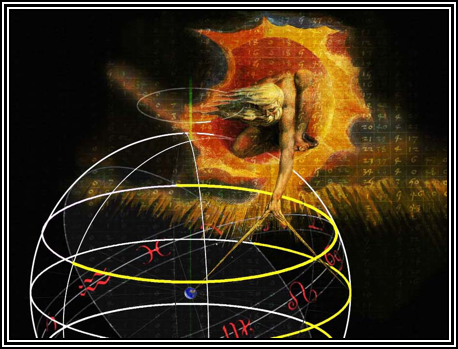
Pastiche incorporating William Blake's "Ancient
of days" (ca.1800)

Welcome to your first assignment page
REFRESH
these assignment pages
using the refresh button on your browser
every time you view them.
I often update them with new information.
This
assignment page is much longer and goes into much more detail than usual,
for
it describes the mechanics of using this web site and our class materials.
Normally
these pages won’t be so wordy.
How to Use the
Assignment Pages and How to Prepare and Submit Homework:
All assignments will be posted on
pages like this one.
They will generally consist of a
list of commands like Read, Write, Draw, Consider… etc.
Readings will be from the books
I asked you to buy or from electronic materials that I have scanned into PDFs
or from other outside sources. A few of the PDFs I have made are of poor
quality and/or are large, sometimes over 10 MB. These may take a few minutes to
download if you have a bad internet connection. I highly recommend that you
take notes as you do the readings.
Quite often the act of taking notes gets you thinking and an essay can
quickly develop from this activity.
Reading with a pencil in hand (or a pen, if you are a mathematician)
should be second nature.
Homeworks assignments are due
the week on which they are assigned unless specified otherwise.
Cite everything. I’ll let you know if you are going to
far with citations, but I can’t think of this ever having happened. Cite me from a lecture, cite your
roommate’s strange observation, cite the conversation you had with your pals at
3:00 am around the family hookah (or narghile or nargileh), cite your dream
about early animal domestication or the video game that referred to some idea
you had… make up the format if you are not sure… cite the newspaper article you
read and mentioned, cite your mother.
Think of your life as one giant lab. Record all data.
Not only are citations good for avoiding plagiarism, but it is good to
keep track of ideas and know where they came from. The more you understand how and why you think, the better
you will think.
For Wednesday: (It looks like there is a lot to do, but much of it is
really easy and not time consuming.)
1- Email me at host@mifami.org from an email account that
you check regularly so that the return address is functional. [I suggest you put my email address in
your address book.] If you have any special interests or things you’d like me
to know about, feel free to tell me about them, otherwise you can just say,
“Hey.” If you have any special needs, let me know about them either in this
email, or talk to me directly. This email is extremely important. It is worth points in my gradebook,
very easy points.
2- Read this class policy
document: Class Policies- HoST-
Fall 2011. These are the nuts and bolts for the class. A link to this is also near the top of
the syllabus. Be prepared for a quiz on this.
3- Buy your books.
a) McClellan, James E., and Harold Dorn. Science and Technology in World History: An Introduction. Baltimore, Md.: Johns Hopkins University Press. The bookstore should have copies of this. Get this immediately.
b) Lucretius’ On the Nature of the Universe (De rerum natura) (Penguin Classics) by Titus Lucretius Carus (Author), John Godwin (Introduction), Ronald E. Latham (Translator). There are numerous translations of this book, but I insist that you use the Latham translation and not any of the translations available on the web as these tend to be more poetic and less interested in the natural philosophy. The Latham is the easiest to read in terms of "science." Get the Latham translation. (Did I say that already?) Most Penguin editions are Latham, but they have recently put out another translation, just to make things confusing. [The Kindle edition is not Latham's translation.] I suggest you order this a.s.a.p. since it might take a week or two to arrive.
-Here is a link to used editions of this book at ABE [Advanced Book Exchange]: http://www.abebooks.com/servlet/SearchResults?kn=lucretius+on+the+nature+latham&sts=t&x=0&y=0 - copies start at $1 and average about $3 (plus shipping).
c) Bown, Stephen R. A Most Damnable Invention: Dynamite, Nitrates, and the Making of the Modern World. New York: T. Dunne Books, 2005.
-Here is a link to used editions at ABE: http://www.abebooks.com/servlet/SearchResults?bsi=0&kn=bown+invention&x=0&y=0 - copies start at less than $2 and average from $4 to $15 (plus shipping).
This may, or may not work – Coupon for 10% off at ABE used booksellers until Sept. 16th. The code is CPNDLL, but in case this doesn't work for you here is the site with the coupon: http://www.abebooks.com/coupons/110701t.shtml?cm_mmc=nl-_-txt-_-t00-pcoupnCCA-_-01cta
4- Read this: Ratliff-Taming.the.Wild-NatGeo-foxes.pdf
[4.9 MB]. The password is:
"open".
For Thursday:
1- Read chapters 1-3
(often referred to as Books I-III) in Genesis from the Judeo/Christian Bible
found here: Genesis:1. If
this one is still too difficult try this one: Genesis:Vulg. Perhaps this one?: Genesis-Ara.pdf. Can you identify what languages these
are in?
I
am guessing that the above Genesis readings were too difficult for most. Now seriously, everybody read
the following parts: Read pp. 9-12, which introduces this translation, and
17-28 which is the actual translation of Books 1-3 into English. Read the
footnotes too.
Alter_Five_Books_of_Moses-Genesis1-3.pdf
4.8MB [better resolution]
Now
go to this web site:
Linked-Word-Project put up by "The Worthwhile Company," but
previously put up by Bob Jones University. Look at the first three books of
Genesis again. Each word or phrase
from this different English translation is linked to a Hebrew dictionary. Click
on a word or phrase and in the box at the right you will get the transliterated
Hebrew word. E.g., "and he rested" in Chapter 2 is
"shabath" in transliterated Hebrew. Also in this box you will find definitions for the word or
phrase, usually several definitions.
Poke around this site and look up a few words (by clicking them) here
and there and see what sorts of alternate meanings you find. Note the
similarities and differences.
2- Write - Select a section of from the Genesis
reading and re-translate it using the dictionary feature in the Linked-Word-Project site and totally
screw around with the meaning of the passage.
Format for this task:
a) Write out the English passage
(3 or 4 lines) that you have chosen to “translate” as given in the Linked-Word-Project site.
b) Now write out the same
passage from the Alter translation that I had you read [linked above in step
#4]. Comment
on differences between the two English translations. Are the differences overt or subtle? Comment on how the differences might
alter the meaning of the passage.
c) Now give your
version. See what you can make it
say by screwing around with the alternate definitions that you can find in the
"Linked-Word-Project" site. For example, click on the work “heaven”
and you get several meanings: heavens, sky, abode of the stars, visible universe,
atmosphere, etc. See if you can
make your passage say something different from what the English translation
says. Comment on what you have done and discuss tricky decisions you had to
make in order to make your version make sense or make nonsense.
Granted, this is a silly
exercise, but it gives you a taste of the translator’s dilemma. Translation is trickier that it seems,
especially when translating literature from a society with a very different
view of how the world works. [It
would be better if this site gave the Hebrew text first and were a bit more
rigorous, but hopefully you get the point.] For any of you who might read Hebrew, Greek, or Latin, you
could similarly translate a section from the sites I linked to above using your
own dictionary. See what you come up with. Have fun with this.
There are no wrong translations.
Don’t be boring! Push it as
far as you can.
Observation:
Languages with small vocabularies tend to give multiple meanings to the same
word. This makes for good poetry
and lots of fun making puns, but it can be a bit tricky for technical or
scientific writing. Also, a
metaphor in one time or society may not be a metaphor in another. E.g. “The sun rises in the morning and
sets in the evening.” We now
imagine a heliocentric solar system, whereas most people before the 15th
century imagined a geocentric terra-system. The statement isn’t wrong then or now, but the type of
statement changes. One is
metaphorical, and the other is literal.
Suggestions: Try to make your passage read like the Big Bang,
or like Darwinian evolution, or like a scene from Transformers.
This
writing assignment is to be done by everyone and is due on Thursday.
New information: You may turn it in to me in
electronic or paper form, but you should have a way to access it in class on
Thursday. So, if it is in an
electronic format, either print it out and bring it, or bring your computer.
Here are the citations for the
above works:
The Bible: The Unbound Bible. Produced by
Boila University. http://unbound.biola.edu/,
accessed 2010. [This site allows
you to compare different tranlsations side by side. I didn't assign anything from this site, but it is quite fun
to poke around.]
The Linked Word Project. Produced by The Worthwhile Company,
accessed 2010. http://bible.worthwhile.com/bible.php?b=gen&c=1&v=0&d=1&w=0 [This is not a very good citation and
furthermore, the site is pretty sketchy and lacking in scholarly
information. I'm using it because
it does what I want it to do, but I would never cite this site in a paper read
by historians. It simply doesn't
have the hallmarks of good scholarship.
What do I mean by "hallmarks of good scholarship?"]
McClellan, James E., and Harold
Dorn. Science
and Technology in World History: An Introduction. Baltimore, Md.: The Johns
Hopkins University Press, 1999.
Alter, Robert. The Five Books of
Moses: A Translation with Commentary. 1st ed. New York: W.W. Norton &
Co., 2004. [It's hard to find
translations of biblical material that isn't filled with a religious
agenda. Alter looks at the texts
with the eye of a translator and Hebrew scholar rather than as a
theologian. It is better suited
for my purposes.]
Ratliff, Evan. "Taming the
Wild." National
Geographic 219, no. 3 (2011): 34-59.
Back
to HoST Fall 2011
Syllabus
Have
a question or need to report a bad link?
Email
me: host@mifami.org
Please
report problems with this our site if you find any. You will get a star next to your name if you do. I need to know if everything works.
Images
for Your Perusal [just for fun at this point]
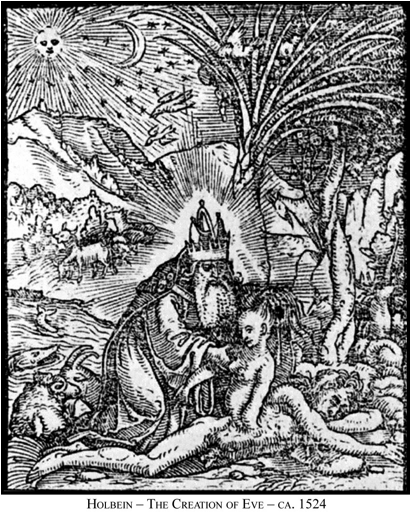
Here
are a few images from Genesis as interpreted by a few European artists from the
past. How well do they represent
the story as you read it? Are they
chronologically accurate? What
things are invented? Why are they
invented? Although I am not asking
that you do anything with these images officially for this week, these could
have been good essay material. Why
are these images so weird? The
answer has as much to do with Aristotle and Greek philosophy as it has to do
with the Bible. We will be
discussing some of this in later classes.

Pay attention to
the worlds shown in these images.
There is/are
physics and chemistry and medicine and astronomy and botany and zoology and in
these pictures.
Here are
two images from the mystic Hildegard von Bingen (1098-1179).
She
was an artist, a composer, a theologian, a mystic, and an all around
interesting woman.
Here
is a link for more information on her: Hildegard-Grove_Article


Interesting
Science News
(I
will often put links to interesting science and technology news items.
Sometimes they are relevant to what we are studying, and sometimes they are
not. These are not required
reading. I found them interesting
and thought you might too. If you
run across an interesting story, let me know.)
Nijhuis - Friend
or Foe? Crows Never Forget a Face, It Seems
Crows
know who you are and where you live.
Watch out!
Back
to HoST Fall 2011
Syllabus
Email
me: host@mifami.org
Review Materials- AlterNotes-DogNotes.pdf [3.4 MB]
[These are my notes.
They are a mess. They may
be more than you want.]